The Tension

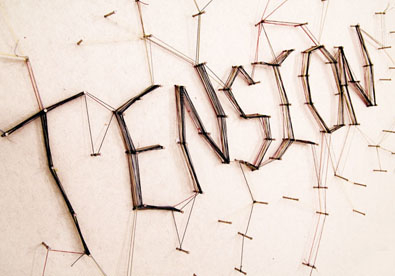
There’s a tension that I feel needs to be discussed in the world of the new grad physical therapist. It’s the tension between clinical excellence and raw practicality.

Let me explain:

In physical therapy school a few things happen: 1. You are exposed to various ways of thought and various levels of expertise, 2. You incur a silly amount of debt. The exposure to different ideas and philosophies in PT are usually presented by people that are clinically impressive, whether they are a CI, guest lecturer, or a professor. If you are like me, when you see these people talk or treat you want to be like them, or better. One example, is a CI I had that was 15 years out of school had his ScD, and COMT, which took him a collective 9 years to acquire/accomplish. He is insanely skillful in the diagnosis and treatment and I want to be like him, or better. But I have debt that his generation didn’t. And here lays the tension. In order to get the formal training that he had I would have to pay an additional $10k and take a minimum of 9 weeks off of paid work to get there. This is not out of the ordinary for advanced clinical degrees and certification.

The tension is that for most new grads they are not making nearly enough money (compared to the debt they just incurred) to drop that much cash and take time off work to increase their clinical skills and not make any more money. I think that this is a huge problem that will really hinder our profession. It is borderline martyrdom to pursue residency/ fellowship after incurring $150,000 of debt just (I use this carefully, because technically you aren’t making more to have advanced certs…paid the same) to advance your clinical skill.


Do you fill this tension DPT Student or New Grad? Let’s chat. Is clinical advancement worth it? Let’s stop avoiding this conversation and let’s have it.

The Student’s Struggle

Every student that pays attention online is constantly getting punched in the face with paradigm shifting information. Hot topics like pain neuroscience, PT role in prevention/ population health, manual therapy…the list goes on. Every time I think I learn something solid, I see a blog post that blows it up. Every time I think I have a grasp on something it seems to slip out of my hands, because “it doesn’t work or there are better ways to go about this.” It can be ultra frustrating as a student because at the end of the day you have to do something with your patients…I expect that this is how I am going to feel for a while, or maybe the entire time I am practicing PT.

My most recent paradigm shift has been a really radical one for me. It is centered on the idea of manual therapy or more specifically tissue specificity in manual therapy. Since the beginning of PT school, when I was spending HOURS learning anatomy, I always thought anatomy and tissue location, type and function were the most important things I could know as a PT. It’s like trying to write a novel without knowing english, it is the language of medicine. Scapulae, transverse processes, ligamentum flavum, multifidi…I continued to pound these things into my head because I wanted to be good. Then we moved from the basic sciences to more clinically relevant courses, like our movement science classes and our musculoskeletal series. During these classes, the clinical side of things built right on top of the anatomy. “If you have an increased dynamic Q angle, it loads the lateral compartment, the ligamentous structures of the knee and so on which causes injury and ultimately pain.” “Mobilize this, move that, stretch this, strengthen that.” It all was making sense. We went on further, more conceptual now. Find the dysfunctions, find the “pain generators”, find contributing factors, concordant signs….again it all made sense. When things hurt, we do a bunch of tests clinically and figure out what the thing is that is messed up and is causing the pain and we fix it…yeah go us!

Well, then I got into the clinic and then I started reading the literature.

What I kept seeing frustrated me…manual therapy isn’t doing what you think it is, connective tissue is too strong to change, all these effects are transient, palpation is awful and unreliable and on and on and on. Well then…looks like all the things I know are wrong…cool beans. So what the heck do I do with people? Well the only thing that is clearly good for everybody is strengthening the crap out of everything, so that’s good. But there’s no system to that, there’s no structure. The people saying that nothing I know works are the ones who have been practicing for 10 years, went through all the additional training in the stuff I know and are NOW saying that. They have a framework. I don’t. So I’m a little lost at this point. Where do I go to figure this stuff out? Now that boards are over (hopefully) how can I get effective in the clinic and not feel like I am maxing out my brain every moment of every day trying to treat “regular” patients.

Enter MDT.

I hated MDT when we learned about it in school. We had one lab on it and we talked about derangements, dysfunctions and postures…all of which were words that I had either not heard of or had very different meanings to me than what they mean to MDT people. We talked about how extension is great for disc patients, practice prone press ups, mentioned that centralization was a thing and we were done…Well that was dumb…they didn’t even tell us how centralization works, or what all this is doing to the specific tissues. I immediately casted it out of my brain and my framework, back to tissues, manual therapy and the sexy cool manipulations and things. Fast forward 2 years, to now. Centralization, directional preference and classification are all part of the clinical practice guideline for treating LBP. Which by the way doesn’t mention a whole lot about tissue specific manual therapy.

My brain is now exploding. My biases and my “system” are being challenged and I don’t like it at all, but I want to know more and be good, so I press on (pun intended). I reach out all the MDT people I know and grill them with questions, Allan Besselink, David Grigsby, Keaton Ray, and some others and they continually impress me. Everything I ask them fits into the system. Turns out MDT doesn’t suck… It is simple. And it is based on movement. And I don’t have to have “good hands” and I don’t have to know if it’s a facet capsule synovitis or a facet joint arthrosis…as much as I freakin want to.

The thing that I thought was a dumb and poorly explained exercise routine turns out to be the best system for evaluating and treatment people without fumbling around with tissue diagnosis. Now, I understand that there is no perfect system out there, I know that MDT has its flaws, like the disc material being pushed here and there, BUT it is a system and a reliably effective system nonetheless that as a new grad I need.

I welcome comments and papers and direction on this topic because ultimately I want to get better and I hope you do too. This is not a dead topic for me…it is still an active struggle and I’m sure it will be for some time but I think the struggle is good.
Alphabet Soup: FAAOMPT

manual_therapy2

The alphabet soup we’re talking about today is probably the longest you’ll ever see after a physical therapists name FAAOMPT. 

What do the letters stand for?

Fellow of the American Academy of Orthopaedic Manual Physical Therapists.

Overview:

The American Academy of Orthopaedic Manual Physical Therapist is an organization with quite a history in manual therapy. They have been advocating for, teaching and improving the practice of manual therapy since the early 1990’s and continue to be the leader in orthopedic manual therapy today. They are the group that manages the educational standards and requirements for orthopedic manual fellowship programs.

How did they get the letters?

To become a fellow you must first complete a residency or be board certified in Orthopedics by the American Board of Physical Therapy Specialties (http://www.abpts.org/home.aspx), resulting in an OSC. Then fellows must apply for, be accepted and complete an intense 12-36 month curriculum of advance manual skills, clinical reasoning, collaboration, research and demonstrate the highest level of clinical excellence in manual therapy.

There are two ways to become board certified in Orthopedics, you can either treat 2000 hours worth of orthopedic patients, which can take upwards of 8-10 years or you can complete an 12-18 month residency at one of the many available locations.

There are many different fellowship locations that you can complete your fellowship training. Here is the current list http://www.abptrfe.org/FellowshipPrograms/ProgramsDirectory/

What does this mean for me as a patient?

As a patient, this means that if you are experiencing pain in your muscles, joints, bones, anything that would fall under the classification of a musculoskeletal  disfunction and you want the highest level of hands on clinical care then you can find a fellow nearby! Fellows have spent an immense amount of time developing their clinical skills and are highly specialized to treat musculoskeletal conditions. Does this mean that your non-fellowship trained physical therapist can’t get you better? Absolutely not! All physical therapists are highly trained to deliver high quality, patient centered care.

What does this mean for me as a student?

As a student, this means that if you know you want to be working hands on with a orthopedic patient population and you want to have the highest level of training in manual therapy then you can pursue Fellowship training! The benefits as a therapist are multifaceted, most simply you will be the expert in your field. With expertise comes opportunity.

Hope these letters make sense now!

//picture courtesy of http://www.therapeuticassociates.com//

Alphabet Soup: What do all these letters mean?

20131019-183610.jpg

You have probably noticed on the end of a name tag at the hospital or a clinic your physician may have M.D. after his or her name, or D.O. maybe even a PhD. Now these are fairly well know but then there are others, especially in physical therapy that may be less well known.

Physical therapy is a field that has a positive impact on a HUGE spectrum across healthcare, which means there are lots of ways that PTs can become more specialized and certified. Many of those additional certifications, residencies result in some additional letters at the end of the name.

I know from the student’s perspective these can be confusing, so I decided to start a blog series that describes this alphabet soup.

What do the letters mean? How did the physical therapist get them? What does that mean for me as a patient? All this will be broken down so that you as the patient can search for a practitioner that is right for you and so that you students out there can have a better understanding of your options after school.

Stay tuned for the first ALPHABET SOUP BLOG POST on The letters FAAOMPT

picture courtesy of: http://www.uwmedicine.org/education/md-program/admissions/youth/pages/explore-health-care.aspx

What makes you tick

Image

Hey classmates,

We have been learning a lot about different ways to think, and different things that govern the way we do operate as PTs.  For example, we learned about the Code of Ethics, which governs (or should) how we interact with our patients, clients, co-workers, public..everyone pretty much.  The Code of Ethics was made with the Core Values in mind, another “governing force” in the way we think and act as professionals.  We also learned about the Nagi model, the ICF model, the EBP model, the patient management model…so many models and diagrams and things governing how we work as PTs.

These things are all good, necessary really, especially for our tiny 1st year brains.  These governing models act as a foundation to learn everything else.

I wanted to propose to you yet ANOTHER governing force to always be cognizant of and to always refer back to.  And that is the answer to this question What makes you tick? What I mean by that is, why are you doing this?  What caused you to want to be a PT.  What do you like about it.  Why are YOU doing what you are doing.

Why this matters:

The reason I am proposing this as a “governing force” in what we do as PTs is because amongst all the other great things we will learn that is simply the thing that will keep YOU on the track you want to be on.  The answer to this question will guide your studying, your time management; it will also give you solidity moving forward as a professional.  If you start your PT pursuit because you wanted to start a practice or you wanted to be in administration or you love working with peds, then never forget that. If we can constantly remind ourselves of our ticker, it will help guide us to (or back to) what we really enjoy about our work.  Let your ticker influence your treatment of your patients, and we will all benefit.

The Challenge:

I wanted to extend a challenge to any student or current physical therapist to really sit down and right out what makes you tick.  Why are you doing what you are doing, and let that guide you in your current situation.


Hope that is helpful

Active Learning

Hey classmates,

This will be a short blog post but I feel like it’s on a very important topic active learning.  As some of you know, I start PT school 3 weeks ago and we hit the ground running.  There has been a decent amount of totally new information (for me at least) thus far and I have found it fairly manageable and enjoyable.  I just wanted to touch on a few thoughts and give you guys some resources.

The first and biggest thought is Active Learning.  I think that now-a-days we have huge technological advances that can be leveraged to help us learn better but we also have the same age-old problems facing our education system, even in a doctoral level graduate program.  That is the tendency to learn passively, or just hear and receive information, usually in the form of power point presentations.  I’m not bashing slide show presentations for a mechanism to teach but I do think that it pushes most of us into this passive, “write things down because I’m hearing them” learning mode and that is really dangerous.  I said this was going to be short so I’ll hold to that promise.

While we can’t change the way we are taught at, we can change the way we learn.

I wanted to push/encourage all of you (myself included) to actively seek out knowledge in class and after class.  I have been using a resource for the last couple of years now that has been priceless (and free :P) called Khanacademy.org.  This website is a great tool for active learning–which to me, basically means learning information by challenging what you are hearing and being able to apply that information.  Khan academy allows you to stop, pause, think, rewind, fast forward through content at your own pace, which I think its huge.

Khan Academy is an online teaching system that has thousands of free videos that are taught by really smart people in a really simple and clean way.  The content ranges from general chemistry to art history and everything in between.  I have found it helpful to refresh myself on basic Biology principles and Chemistry already in PT school, as we learn Pharmacology and some intro Pathology.


I just wanted to push that resource across the table to you all.  I hope you check it out, it has been helpful for me and I hope its helpful for you.


Part 1: The Tuition Problem

The purpose of the post series is to create some discussion on a pretty hot topic in PT, high tuition.  More than anything I want to hear from others in the field and some students on some ideas.

This is a pretty hot topic among all professional students, especially us current DPT students. WARNING: I tend to be on the optimist side of the future of DPT discussion, theres a lot of negativity and confusion about the future of reimbursement, tuition, blah blah, the world is ending… That’s not what I’m about, I think the cream rises to the top, and the cream in health care is the best and most efficient (cheapest) patient care. PT is in a very unique position to deliver both of those things, as well as offer preventative care. The problem with the cost of DPT school has a massive trickling effect that eventually lands on the health care system as a whole.  For example, Joe Shmoe, DPT gets out of school with $100,000 of debt, he is going to have to do everything he can to make his $50,000 starting salary work.  In many outpatient settings I know there are productivity bonuses, so the more patients Joe Shmoe sees the more he makes.  He sees 2 or 3 patients and hour in order to make more to pay off his debt.  Its a vicious cycle for the PT and the patient.


I know there are some bright thinkers out there testing models on how we can lighten the financial burden and make our education better by casting some of that burden onto technology.  These are the people we need to look toward, these are the ideas that are going to change our profession.


If you are interested in this there is a twitter discussion March 27th at 9est about it at #DPTStudent