Musings on Tape

Yesterday I was playing with my 3-year-old and had an interesting thought. We were playing with a roll of decorative tape (one of her favorite things in the world) and her children’s scissors (another one of her favorite things). We were cutting the tape and wrapping on our arms and legs, then she said something interesting that got me thinking. “Daddy my knee hurts (she scraped it a couple days ago) but it’s getting BUTTER (how she says better).” With her bringing up her pains, us playing with tape and me being a PT nerd I automatically thought about Kinesiotape.

I remember when she got her scrape days before and she was freaking out, I kissed it and put a band-aid on it, which immediately made it “butter.” She went from complete lose of bodily control and crying, to instantly wanting to return to playing with a kiss and band-aid.

In my head (as we continue to wrap tape around my toes) I wondered, how similar are the two scenarios: a toddler getting kissed and a band-aid and an adult getting massaged and taped.

I rarely tape my patients unless they ask for it. (There is one scenario where I think it is helpful (link)). To me putting tape on something does nothing for the underlying cause of their symptoms, therefore I don’t offer it, and I am not alone in that (link).

But, and this is a big but. Sometimes it helps people…this gives me a headache. This is why my job is difficult. Sometimes tape is the only thing that makes someone feel better. It is the only thing that lets them lift their arm without pain or finish a workout unhindered. Why does a band-aid and a kiss make my daughter feel better? Placebo maybe, not sure. But it does.

This really gets at the heart of the messiness of clinical practice. It is my responsibility to offer my patients the most up-to-date and evidence-based care, which I try to do. This does not include tape, unless it does… We healthcare providers (that give a rip) have to wiggle sometimes. We have to listen to our clients, know the evidence and do things that don’t make sense sometimes (to a certain extent). If you find yourself disagreeing with me, first comment, I’d love to talk about it, then ask yourself this. Would you not give a 3 year old a kiss and a band-aid because “the evidence is not there…” or would you listen to her/him and do it lovingly. Just a thought. Let me hear yours.
 

When and How I use Kinesiotape

I ALMOST never use kinesiotape in the clinic. I have a few reasons for that:

  1. It is no better than sham taping (link, link)
  2. It is passive (not exercise based)
  3. It does not hold things together or change the position of structures (link)
  4. I still have the arts and crafts skills of a 3rd grader…so I suck at it.

I think the evidence concluding that it is not better than sham indicates that it is not worth my time, but I do use it sometimes.

Over the last year I have probably used kinesiotape <5 times. I think 4 of those were because people out right asked for it without me mentioning a thing. In that scenario I’m going to ride the placebo train all the way to feel-betterville, while not over-promising anything. The one other time is what I want to talk about because I feel like it actually fits into my reasoning model, I just haven’t seen the type of patient enough.

Taping does have minor effects on pain (placebo?) and proprioception (https://www.ncbi.nlm.nih.gov/pubmed/8231783). Which make sense because you are putting something on your skin, so your nervous system is feeling that thing and giving you more awareness of the aforementioned thing. In my practice this is helpful for one specific condition or classification.

I try to be as evidence-based as possible, therefore I use the McKenzie system to classify patients. For my thoughts on that go here. One of the classifications is Posture, which essentially means that the patient’s symptoms are aggravated only when they stay in a particular position of a long time. When they get out of that position, their symptoms go away. Abnormal stress on normal tissues. This is a fairly rare presentation to see in the clinic, hence the reason I have only used tape a few times. In the posture classification the only thing that aggravates the patient is a certain sustained posture…so I get them in the posture that takes their pain away (ie. chin tuck/ double chin, when having their chin way forward hurts their neck) and I put tape on them in a way that when they move into their provoking position it tensions. The tension on the tape/skin is felt by the patient and acts as a reminding for them to move out of that position.

This is a very helpful educational tool for patients. It is essentially like having me with them all day to say “hey move your neck, so it doesn’t start hurting.” Nothing magically there.

How do you use tape?

Blood Flow Restriction

Overall Score: 5/5

Practicality: 5/5

EBP: 5/5

Marketability: 5/5

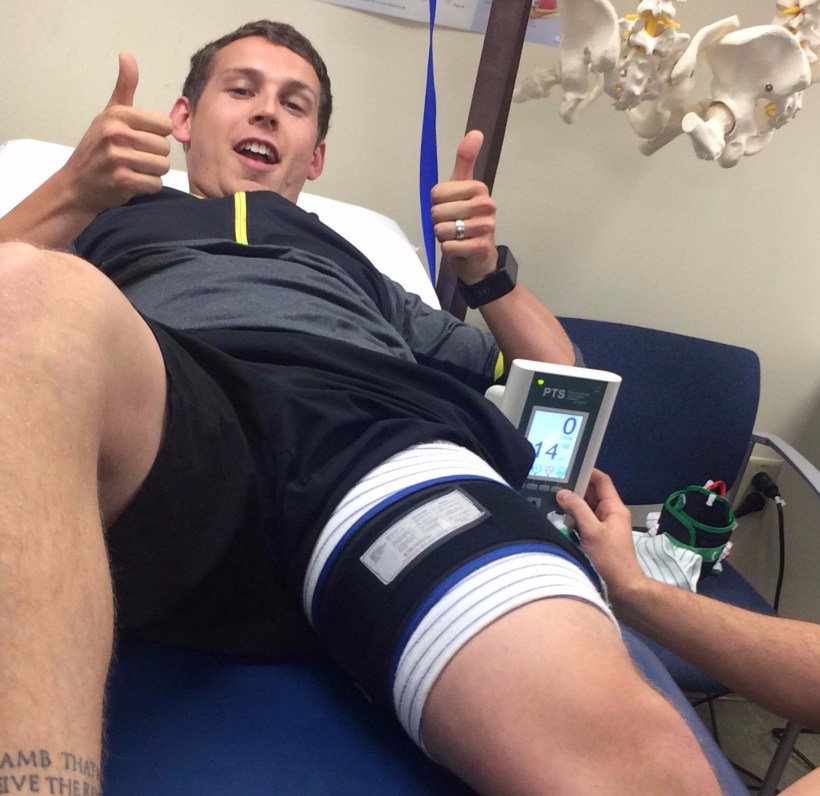
Over the weekend I attended Johnny Owens’ Blood Flow Restriction course and it was fantastic! I generally look for a couple of things in continuing education: 1. Practicality, 2. Evidence-based philosophy/techniques/etc. 3. A marketable skill for myself/ my clinic.

This course hit all three of those out of the park.

I went into this course with a fairly good grasp on blood flow restriction (or BFR) and was excited to get more of the practice side of the application. Honestly, I thought I was going to get a lot of practical application and a marketable skill for the clinic, however I was pleasantly surprised at the sheer volume of evidence presented at the course. I was actually shocked.

Johnny has as good of a grasp on the literature around BFR as any person on any topic I have ever seen present, it was almost unbelievable. Every relevant study, even some non-relevant ones were presented from memory… All the current studies happening, all the planned studies, the authors, the locations. It was truly impressive. Not only was Johnny’s handle on the literature impresssive but the actual literature itself was very well developed and persuasive.

BFR has been around for a long time and it is a powerful tool that effects multiple body systems. It is also fairly easy to study because it is an easily applied intervention and the outcome measures being studied are phsyiological, meaning blood work, imaging, etc. can reliable monitor changes. Because of this there has been a HUGE volume of work done (and currently being down) exploring some very well defined questions related to BFR.

The course was also very practical. We had lecture then we practiced using the Delphi BFR Units. Simple and to the point. The units are really easy to operate.

The course was about 8.5 hours long and could easily be stretched into a 2 day course but I’m glad it wasn’t just for time sake. The sheer amount of information presented is a little bit like drinking from a fire hose, especially around 3 or 4 o’clock when I was getting mentally tired BUT part of the cost of the course is a very detailed course manual that contains all of the information covered. I have already started re-reading the course manual to more fully understand the science behind BFR and it is actually written in a way that is easy to read.

Overall, the course was great. I believe with the volume and quality of evidence behind BFR that it will become a normal part of all outpatient rehabilitation, especially for clinics that see post-op patients. Johnny is a super nice guy and makes himself available to anyone that has been through his course.

One important thing to mention about the BFR as a whole is, because tourniques are powerful tools (why they are used in surgeries everyday to fully oclude blood flow), they can be very dangerous to apply. For this reason, the FDA classifies pneumatic tourniquets as Class 1 medical devices, meaning that a certification and medical license (PT license is included) are required to purchase and operate. The Delphi unit that Johnny distributes is actually the only FDA approved unit available in the market currently, so from a legal stand point as a clinician it is the only real option.

To be a hater or not to be…

“Haters gonna hate.”

I have found myself on a swinging pendulum of hate lately…that sounds really weird and terrible. Let me clarify. There is a spectrum between 2 things: hating on everything because it is not legitimate and accepting anything and everything because “it works for me.” In the rehab/ fitness world everyone falls somewhere on this spectrum. Some could care less whether something has been properly studied, it is sexy therefore they endorse it. The other side is a group of people who are air-tight clinical scientists that will not only shy away from treatments/philosophies/techniques that are not determined effective by research but will aggressively oppose them. One is a lazy and probably a bad clinician, the other needs to have a hobby and is probably tough to get along with..which is massively important in physical therapy (see all therapeutic alliance research). I have found myself closer to the grumpy guy who needs a hobby for the majority of my schooling and now into my career. I like science and I want to do the best job I can as a physical therapist, which has led me to read research and try to base what I do in the clinic on that research. However, I am starting to realize that being grumpy about what other people are doing in the clinic is silly…I am swinging on the pendulum of haterness. I have found myself embracing/being ok with some of the other philosophies that different from me lately, even if I don’t agree with what they are saying. For example, I don’t love when my current patients come to me telling me they had a mysterious essential oil massage over the weekend and they feel the best they have in weeks (I have been treating them for weeks…). I don’t like that. It’s confusing. It doesn’t make sense that someone with a raging disc herniation that is irritating a nerve root causing radicular leg pain would get better by rubbing lavender-mint oils on their back and “IT bands”. But it happens. People get better with weird stuff sometimes and I am starting to just come to peace with that truth. I am not going to try to tell the patient that there is no way lavender fixed their spinal nerve roots…I am going to go “Great! I’m so glad you are feeling better,” and move on with treating them.

I am ok with things that shouldn’t make sense working. I am going to chalk most of it up to placebo, for now. The real problem that I (and other PTs) face is this: how am I going to decide when a treatment is legit or not? That is the biggest challenge with all of this. Is lavender-mint oil a viable treatment selection for my patient? If so, how do I come to that conclusion?

While I have been moving slightly towards the other end of the spectrum as far as my attitudes towards other interventions, I still have a responsibility to treat my patients with the highest level of care I can, which means using treatments that are known to work. My gameplan is to learn the heck out of a very well researched and documented system (my choice is the McKenzie Method for a few reasons) and then layer in stuff that is less well understood as people don’t respond. There are people who will get better with lavender-mint but I’m going to try to bring them through a number of “tried and true ” interventions, get them strong and encourage the heck out of them before I move on to some more uncertain things.

This makes me look ultra un-sexy in the grand scheme of the rehab/fitness world, but I’m ok with that..haters going to hate.

Listening

Listen to your patient.

This is becoming a bit of a buzz-phrase if that is a thing. Listen to your patient, listen to your patient, listen to your patient.

To be honest it is a bit confusing to me. Maybe I just don’t understand the context of those saying this, but how are providers NOT listening to their patients?

Short rant begins now. I don’t understand how countless providers could not give patients the time of day and throw a solution at them. Any physical therapist worth their salt knows that about 75% of your “diagnosis” is made in the subjective portion of the exam. Not only that but in order to make a patient’s treatment work for them, we need to know what they do, what their hobbies are, who the heck they are. Even if we got all of that we still need to convince the patient that we give a rip about them. How are people doing that without listening…what the heck is going on in clinics all over the country.

Rant over.

I think the listening problem is actually a caring problem. Providers that aren’t listening to their people don’t care about their people. I don’t think I am over-exaggerating that point. It is simply our job to listen well and help our patients.

Please. I’m not going to plead with you to listen to your patients…that is like putting a band-aid on a gunshot. I’m pleading with you to care about your patients. I know you care for them but let’s starting caring about them. This will solve a large number of problems.

Fixing Healthcare

I have been newly intrigued by entrepreneurship through a series at Creative Live called 30 Days of Genius. This series is essentially 30 different interviews with the world’s brightest creative minds, business minds, entrepreneurs, coaches, etc. The interviews are fantastic and they email you one interview per day for 30 days.

It is tough to listen to these creative geniuses, brilliant entrepreneurs, and great business minds without being a tad bit inspired. Because physical therapy is my career and healthcare is my industry I view these thought-provoking interviews through a certain set of lenses. How can I apply these great principles of creativity and business to my field and make a difference? It’s a tough but intriguing question.

I think the solution starts with seeing the problem with as wide of a lens as possible. The soldiers in the trenches of warfare have a no ability to see the grand narrative of the whole war, but only the mud, muck, and danger that is right in front of them. It is the general who can zoom out and see the bigger movements of the opposing troops, underlying strategies and use data, as well as intuition, to predict his next move. We need more generals in healthcare. Seeing the big picture in healthcare is very difficult however because it is such a big system with so many parts and so many players. I don’t claim to see it very well or clearly, but I do think it is helpful to try to think on a large scale.

The second part of creatively solving the problem of healthcare is breaking down the problem into small and manageable pieces. Costs are high, quality is low, access is poor, waste is rampant, people are unhealthy. We have a lot of problems, that list is a very small one. Each piece can be broken down further. Why are costs high? Why is the quality low? Why is access poor? Why is waste rampant? Why are people unhealthy?

Then we go to the drawing board. What solutions can change the way healthcare is delivered to drive cost down? What solutions can make healthcare higher quality? What solutions can make access to healthcare better? What solutions can eliminate waste in the system? What solutions can improve peoples’ health?

I think we usually stop at this point. Most of the conversations on twitter derail here. We know there is a problem, even a solvable problem but there are at least 2 viewpoints and we end up smashing our heads against the wall and conversation stops. We don’t have time to deal with these questions, we have patients to treat and errands to run. I get that. But I truly believe that innovation happens when an individual takes a problem and tries to solve it. Healthcare is a big mess and there are plenty of problems, I don’t think the solution is for it to become “their problem” or an “us problem”. What is happening at the “you level?” What problems do you see in your community and how can your skill set change that? What about regionally? Nationally?

I believe that we need some major thinkers in healthcare, some generals that can see the whole battlefield and move skillfully toward solutions. Don’t let yourself think too small or too practically, true genius is born when boundaries are broken and limitations lifted.


Core Stability: Does it matter?

There are camps in physical therapy that like to bash each other about their treatment styles, beliefs, gurus, etc. I think some of that is warranted, some seems a little on the rude side. One topic that tends to drive people to their camps to sling poo at the other camp is core stability. 

I have gone back and forth between camps on this one. On one side is the “activate transverse abdominous 64% while sitting on the toilet” camp and on the other is the “just make them strong humans” camp. The first would take a patient through a somewhat elaborate sequence of motor control activities to try to get the patient to independently and volitionally active their deep core muscles. The other side, championed by Stuart McGill among others, would advocate for a more general core strengthening program, including: planks, “McGill curl-ups”, bird-dogs, etc. while not necessarily giving a rip if the TA is activated or not.

I started in camp TA and have moved to camp get strong, for the most part, BUT I recently had an interesting patient that made me step back towards the middle of the camps…no man’s land, if you will. Long story short, she was a weak, middle-aged women with low back pain. No red flag scary business. After taking her through my “normal” low back assessment system, I was a little stumped. So I started to see if I could change her symptoms any other way. The only way we could decrease (and actually abolish) her symptoms was to activate her TA specifically. Now, I know team “get people strong” may be grumbling right now, saying “it’s not even possible to isolate…blah blah blah.” I get that because I usually am the one saying that. But in this particular case for this particular women for some particular reason, when she contracted her TA (or tried to) and performed a previously painful movement she had no pain. 

So what do I do with that? I didn’t just throw that tid bit of information out and continue telling myself that TA activation doesn’t matter, I ran with it. I had her activate her TA with other movements that hurt during the assessment, no pain. Then I loaded those movements and challenged her in novel movement patterns all while contracting her TA. She didn’t have any pain and she was moving her skeleton around…a win in my book.

So does core stability matter? I would say this: if doing something changes a patient’s pain, especially if it completely removes their pain, it matters. I know this is a slippery slope, but if we don’t skillfully navigate slippery slopes as physical therapists patients like her don’t have the same level of success, right? Let’s navigate the slippery slopes, the muddy waters, the no man’s land between camps well so that people don’t slip through the cracks all because our camp wouldn’t agree.

Sleep

Depending on how tired you are, you probably read the title of this post as either a noun or a command.

Sleep is similar to drinking water and taking vitamins….we know we need to but we end up not doing it. The interesting thing about sleep though is that in our society it is celebrated to operate on very little sleep. I often hear people almost bragging about only getting 4 hours of sleep….what is that? I have never heard someone say, “hey dude…guess what…I have only had 1 glass of water today…” If anyone said that we would immediately consider them a bit strange. But sleep, we celebrate. Like oh you must be some kind of tough superhuman that is so efficient that you don’t have to waste your time sleeping.

You may be one of those people.

I think it is time to rethink the sleep problem we have in our society. There is plenty of science (summarized well in this book) that shows us that sleep is not only something that helps us stay healthy, it actually is like a performance enhancing drug. Our brains thrive when they are given enough sleep. We are more creative, productive, joyful and clear-headed.

I think it’s time we stop treating sleep as a waste of time and start treating it like a way to increase our performance. I can already hear some people grumbling while reading this post. The people who value “hustle” and don’t believe in work-life balance and the people who think that a good day of work is a long day of work. I hear you grumbling. This message is not a plea for people to be lazy or to achieve less, this is a plea for the exact opposite. We need well-rested people. We need dreamers that can see solutions and think clearly about big problems in our society.

Sleeping 8 hours a night is not going to kill your business, ruin your relationships, hurt your career or burn you out…the opposite will.

This is why I want to challenge you (and myself) to the 30-day sleep challenge. The challenge is this, for the next 30 days, you will do your best to attempt to get 8 hours of sleep per night and see how your life changes. There will be nights that you stay up too late, and nights that your 2-year-old wakes you up…that is ok. Do your best, though. Below is a list of a few things you can do to improve your sleep over the next 30 days. Good luck!

Other Resources:

12 Tips for Better Night Sleep

8 Famous Ideas That Came From Dreams


sleeprevolution_manifestosocial_facebookinstagram-2

Technique Matters

My wife’s birthday is this weekend and my mom made her a cake. A chocolate cake. If you know anything about my mom it’s that she is basically the greatest chief of all time. You name it, she crushes it. Well, she absolutely crushed this chocolate cake. I just finished eating it, and I promise you it was the best chocolate cake on planet earth.

Maybe it was the chocolate cake being so good maybe it was just my ADD brain, but this experience of eating this cake got me thinking. How the heck is this chocolate cake so much better than a normal or even above average chocolate cake. There is something different. So I asked the chief herself. “Why is this so good?” This started a 10-minute breakdown of all the intricacies involved with every step of making the most dynamite chocolate cake in the history. It was jaw dropping. So many steps and each one had slight nuances and variables that needed to be perfect.

I have made chocolate cake before. It was out of a nice red box, I put some eggs in with some powder, I believe, haphazardly mixed it and then put it in a not fully pre-heated oven. Ultimately the same physical things went into that cake as my mom’s (that’s actually not true at all but run with it…sorry mom), but my cake was super dry and gross, and my mom’s made me want to eat until I required a wheelbarrow to exit the house.

The ingredients were the same but the technique was very different.

Upon reflecting on the greatest of the cake I came to the conclusion that technique matters. The little things add up. In cake making, they make a huge difference and I think the same is true for almost anything, including physical therapy.

There is a shift happening in the field of physical therapy both in the research and in certain circles away from highly technical manual therapy “tricks and techniques,” some would say that all those fancy techniques are nothing but a placebo. I think that’s a little bit of a stretch, but I do find myself leaning towards the “fancy techniques probably don’t matter so much team”….for now.

But

Technique matters a heck of a lot when making a cake and I think that the pendulum may be swinging a little too far in some circles of physical therapy. I think there is a difference (one that is very hard to detect in clinical research) between highly skilled (very technically saavy) PT and very basic PT. Like my cake vs. my mom’s. Some papers will say manual therapy works for this that or the other, some say it doesn’t but I think classifying an entire treatment method without taking the craftsmanship of the person delivering that treatment into account is missing something.

Manual therapy is just one explain. Teaching patients is another example, or exercise prescription…the list goes on and on. It is very difficult to truly measure and compare treatments because technique and nuance are very hard to account for.

In the world of conservative musculoskeletal medicine where lots of tiny effects make up big effects the nuances matter just like in making cake. Lots of little techniques at each step end up making a massive difference in the end product. 

Technique matters.

Sucks to be Wrong

It sucks to be wrong.

I was wrong about the McKenzie system (or MDT). In school, we were briefly taught a bastardized version of the McKenzie “system” and it only confused and irritated me. I hated it. It made no sense. It made no sense because it wasn’t pathoanatomical, which was all I knew. I wanted to know what specific tissue in the body was the “cause” of the pain. Was it the inner or outer portion of the annulus of the disc? Was it the facet joint synovial capsule? Or was it the articular surface of the facet joint? I NEEDED to know!!!

I needed to know because in school treating patients was just a puzzle to be solved and there was ALWAYS an answer. This test meant that this tissue was the culprit, the other test meant that this tissue was the culprit…I would explain it all eloquently on paper, write the correct answer and puff my chest out because of how awesome I was.

Well, things have changed and I was wrong about good ole’ Robin McKenzie and his system. The same reasons that I absolutely despised MDT have become the reasons I love the system, which are:

1. Pathoanatomy

I used to need and love the “pain generator” in school, now I love MDTs ability to avoid the tissue and get straight to what really matters the patient’s experience. I started to realize in the real world with real patients that it is very very difficult to determine the specific tissues that are “causing” someone’s pain, and we know better now…tissues don’t cause pain. MDT looks at how a movement affects the patient’s pain, objectively, no bias or assumptions as to what tissue is doing that.

2. Simplicity

I used to hate how simple MDT was. How could simply repeating osteokinematic movements reduce someone’s pain? Don’t you have to glide the facet joint caudally with an anterio-medial emphasis? The more I read and learned the more I realized that osteokinematic movements are effective because they do very similar things to what we aim to do with manual therapy. Get joints to end range.

3. Effectiveness

This has been the biggest reason for my new love of the MDT system. MDT helps me systematically finding “home runs” that I missed before I did repeated motion testing. I used to do central PAs or traction on patients who may have had a clear directional preference or even centralization.

4. Reliability

The system is reliable based on a lot of papers (source, one of many papers) and based on the fact that is made up of simple osteokinematic movements and patient response, not palpation which is not reliable (source, one of many here as well), especially for me as a new PT.

5. Active not passive

I have found in my work with clients so far that it is much easier to get the locus of control, or in non-nerd terms, the ownership of the care, onto themselves if my treatment approach is an active one. If the patient is the one doing the movement actively as opposed to me manually doing it for them or to them, they are more likely to understand that they are responsible for improving. I still use passive treatments and I think that passive treatments are still an important part of some patient’s care but it is usually harder to get those patients to “own” their care.

6. Easier to incorporate pain science

I have found that it is easier to explain how a treatment works using pain science when using MDT. The biggest help is that the assessment and classification have nothing to do with their “bulging disc”, “bone-on-bone”, or any other terrible verbiage that sticks in patient’s heads, making them feel brittle. MDT assessment and treatment makes it easy to tell patients that their bodies are strong, adaptable and feel better with movement.


While it sucks to be wrong, I’m glad that I wrestled with a topic that I was completely biased against and have grown so much from.


Disclaimer: I don’t claim to know everything about PT assessment and treatment or MDT. I am constantly reading and learning and this blog is part of that metamorphosis. I also think there are lots of other great systems for PT. My point is simply that I have found a lot of help from something that I previously biased and now find quite helpful.